





We’ve all been there sitting on the suitcase, trying to zip it shut, wondering how it got this full. A dozen shirts, multiple pairs of shoes, three jackets for a four-day trip… and somehow, we’ll still complain that we have nothing to wear. Overpacking is one of the most common travel mistakes, and yet, it’s also one of the easiest to fix.
Packing smart isn’t about learning to live with less it’s about packing with intention. It’s understanding what you actually need, what you never use, and how to make every item in your bag work harder. When you master the art of packing efficiently, you’ll not only save space and money, but also travel lighter, move faster, and feel freer.
Let’s break down how to transform your packing habits so that you never overpack again no matter where you’re going or how long you’re staying.
Start with a Purpose, Not a Pile
The biggest mistake most travelers make is starting their packing process by pulling things out of the closet. That’s how chaos begins.
Instead, start with a clear plan. Ask yourself: What’s the purpose of this trip? Is it a city break, a beach vacation, a business trip, or an outdoor adventure? Your answer determines your priorities not your closet.
Once you know what you’ll actually be doing, create a short list of essentials: the number of days, expected weather, and types of activities. When you focus on function first, you naturally pack smarter because every item earns its place.
For example, if you’re heading to a coastal city for five days in spring, you don’t need three pairs of jeans. You need one that matches everything, a couple of versatile tops, and layers that can adjust to changing temperatures. Planning eliminates impulse packing and that’s where the magic begins.
The Rule of Versatility
Every item you pack should serve more than one purpose. That’s the golden rule of smart packing.
A lightweight jacket that works as a raincoat and a windbreaker. Sneakers that look stylish enough for dinner but comfortable enough for exploring. A scarf that doubles as a blanket on the plane.
When you pack items that can adapt, your wardrobe becomes modular you can mix and match, layer up or down, and handle multiple occasions without overstuffing your bag. Choose neutral or complementary colors that work together so you can build outfits from fewer pieces.
Think “capsule wardrobe,” not “just in case.” You’ll be amazed how freeing it feels when every piece in your suitcase belongs there with purpose.
The Power of Packing Cubes
If there’s one tool that transforms the way you pack, it’s packing cubes. These lightweight fabric organizers don’t just make your suitcase neater they make it smarter.
Use one for tops, one for bottoms, one for undergarments or accessories. It keeps your bag organized and lets you find things quickly without tearing everything apart.
For even more space, try rolling your clothes instead of folding them. Rolling minimizes wrinkles, uses every corner of space, and makes your clothes easier to grab.
If you’ve ever opened your bag to a chaotic jumble of fabric, you’ll understand how big of a difference this simple trick makes. It’s like having drawers inside your suitcase neat, compact, and travel-ready.
The “Two Outfits Less” Rule
Here’s a simple yet powerful mindset shift: once you’ve packed everything, take out two outfits.
Most travelers pack around 20% more than they actually wear. It’s almost guaranteed. We add “just in case” clothes that never leave the bag backup jeans, an extra sweater, that second pair of sandals. By removing a couple of extras before zipping up, you automatically bring your luggage closer to what you’ll realistically use.
It’s a small act of discipline that pays off in space, weight, and peace of mind. And trust me you won’t miss those extra items once you’re on the road.
Choose the Right Fabrics
Not all fabrics are travel-friendly. Some wrinkle easily, take forever to dry, or weigh down your bag. Smart packers choose materials that are lightweight, breathable, and quick-drying.
Look for performance fabrics that resist wrinkles, merino wool that stays fresh longer, or cotton blends that handle both warm and cool weather. Synthetic blends are great for active trips, while linen and light cottons are ideal for warm climates.
When your clothes work with your trip not against it you can pack less and wear each piece more often. And since everything folds smaller and dries faster, you’ll be ready for any situation without overstuffing your luggage.
Rethink Toiletries and Tech
Most overpackers don’t realize how much weight and space they waste on toiletries and gadgets.
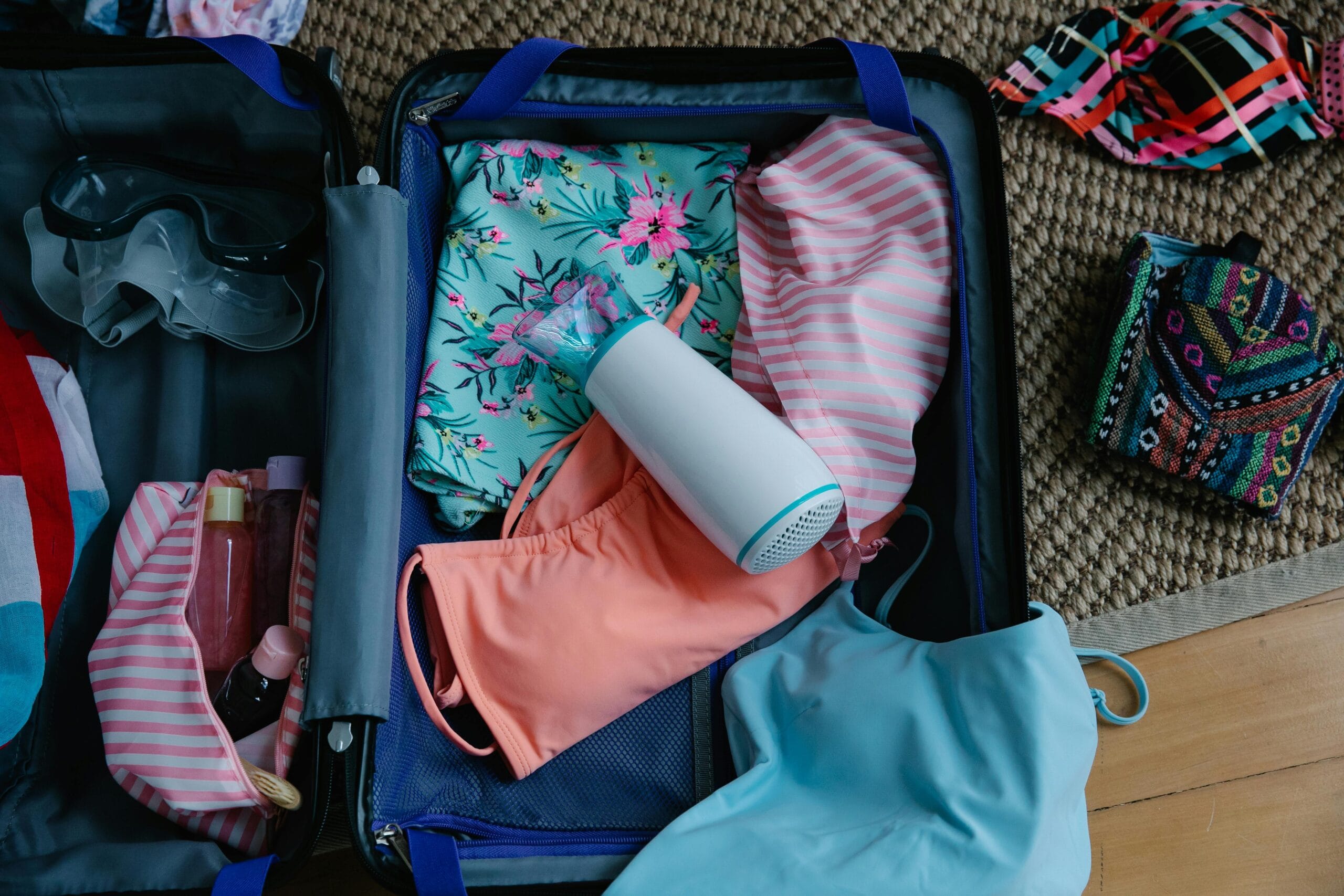
First, never bring full-sized bottles. Transfer your shampoo, conditioner, and lotion into travel containers or reusable silicone tubes. Most hotels and Airbnbs offer basic toiletries anyway so there’s no need to carry your entire bathroom.
As for electronics, travel with only what you’ll genuinely use. A laptop, phone, and charger are plenty for most travelers. Add headphones and maybe a power bank if you’ll be on the move often. Leave the extra cords, adapters, and “just in case” gadgets at home.
You can save an incredible amount of space by going minimalist with your tech and toiletries and you’ll barely notice the difference.
The Footwear Formula
Shoes are often the heaviest and bulkiest things in your bag. That’s why you should follow a simple footwear formula: wear one, pack two.
Your worn pair should be your heaviest and most versatile like sneakers or boots and your packed pair should complement the trip. Maybe sandals for warm weather or flats for evenings out. Three pairs max is almost always enough, even for longer trips.
To save even more room, stuff socks or small accessories inside your shoes. Every cubic inch counts when you’re trying to keep your luggage compact and organized.
Plan Laundry, Not Excess
One of the smartest ways to travel light is to plan to do laundry instead of packing more clothes. Many hotels, Airbnbs, and even hostels have laundry facilities or local services that make it quick and affordable.
If you’re traveling for more than a week, you don’t need two weeks’ worth of outfits. Pack for seven days, do laundry halfway through, and enjoy the extra space. It’s also a good reason to pack lighter fabrics that wash and dry easily overnight.
Planning to wash instead of overpack not only saves room but also keeps your wardrobe fresh throughout the trip.

Think Like a Minimalist Traveler
The art of packing smart is really about adopting a minimalist mindset less clutter, more clarity. When you travel with less, you move through airports faster, unpack in minutes, and carry only what truly matters.
Your luggage feels lighter, your choices simpler, and your energy freer to focus on the experiences instead of the logistics. You’ll notice how much easier it is to stay organized when your suitcase isn’t a jigsaw puzzle.
Smart packing isn’t just about saving space; it’s about traveling better. It’s about replacing stress with simplicity and swapping excess for efficiency.
Arrive Light, Leave Room
One final rule: always leave space in your bag. You’ll likely buy something a local souvenir, a piece of clothing, or something practical for the road. Having extra room means you won’t struggle to fit new items or pay extra baggage fees.
There’s a subtle joy in coming home with a few thoughtful finds instead of an overstuffed suitcase. It means you traveled smarter, not heavier.
Travel Light, Live Better
Learning how to pack smart is one of the simplest ways to make travel more enjoyable. You’ll move with ease, save time at the airport, and have more energy for what truly matters exploring, relaxing, and connecting.
When you pack light, you’re not just reducing baggage weight you’re freeing yourself from unnecessary decisions and distractions. Every trip feels smoother, every departure easier, and every arrival lighter.
So next time you travel, remember this: pack with purpose, think in layers, and let go of the “what ifs.” Once you do, you’ll realize that traveling light isn’t about having less it’s about making room for more of what matters.